
This piece was originally written in Dutch but has been translated into English upon request.
For a while now, I’d been walking around with a (rather bizarre) idea for a story. For five days straight, I wrote every spare moment I had. I’ve never been so deeply absorbed in a story before, nor worked on one with so much pleasure. It’s about a world that resembles our own, where things happen you may recognize — such as the sudden shift of the five tech giants — but with a twist.
It’s a long story, so settle into a comfortable chair with a cup of tea or a glass of wine.
Are you ready? Then let me take you to Samkat…
EARLY TIME
Samkat was once a thriving planet teeming with life: vast fields, forests, and lakes dotted with all kinds of beautiful animals. Scattered across Samkat were small villages where the Samkatans lived, each with its own customs and structure. The wild areas around the villages provided everything the inhabitants needed to survive. The hunters never killed more animals than necessary to feed and clothe the people, and they sowed as many flowers, trees, vegetables, and fruits as they harvested.
Because people reproduced with great enthusiasm, more villages emerged, and the spaces between them gradually grew smaller. But that didn’t matter: there was enough room and food for everyone. Everything remained in balance — until the inhabitants of Lathura and nearby Eirenia began to quarrel over a tree that stood in the overlapping area between their lands. The people of Lathura wanted to keep the tree for its beauty and shade, while the people of Eirenia wanted to cut it down to make furniture and firewood. The quarrel escalated, accusations grew harsher, and eventually fights broke out, leading to several deaths — something that had never happened before.
After days of fighting and even more deaths, Alyndra, one of Lathura’s elders, had an idea. She negotiated a truce of three luna, promising to return with a solution, and ventured into the wilderness with only a small bundle. She had the broad outlines of her idea in mind but needed time to develop it.
After three luna, Alyndra returned. She asked the inhabitants of Lathura and Eirenia to prepare various delicacies, dress in comfortable clothing, and gather around a fire pit she had arranged beneath the disputed tree. The turnout was lower than it should have been — many lives had been lost. Both villages had lost skilled hunters and planters, causing their food supplies to dwindle faster than they could be replenished. The delicacies people brought were therefore a significant communal sacrifice, even though the villagers passed each other with hateful glances and stiff shoulders.
When everyone was finally seated and looking at Alyndra with anticipation, she stood up and let her gaze calmly sweep across the serious faces in the circle. Then she began to speak about her arduous journey and the important message she had to deliver.
Alyndra told them that after a few days in the wilderness, her food had run out, and she had grown so hungry that she ate strange‑tasting berries. She described how the rain grew heavier and heavier, how she found a cave for shelter and built a fire, and how she began to hallucinate from hunger, exhaustion, cold, and perhaps the berries. She spoke of a vision she received of a beautiful woman with long grey hair who introduced herself as Samura. Samura told Alyndra that she was the primordial creator: with her boundless powers, she had shaped a world of lush landscapes, vibrant seas, and a vast starry sky. Then she created humanity from stardust, giving them intelligence, emotion, and the power to create and destroy — along with the responsibility that came with it. She asked Alyndra to tell the people about this and gave her instructions for agreements that would help them live together harmoniously.
Alyndra paused and looked around. Everyone sat still, listening intently, completely absorbed in her tale. None of it was true, of course, but she wanted her story to leave a deep and unforgettable impression on her fellow villagers and the people of Eirenia. She asked for something to drink to moisten her throat — giving herself a moment to think. What were her main goals again? Right: something that would unite people long‑term, something that would prevent future conflicts, and a few practical measures.
She took a sip, cleared her throat, and continued.
Samura had said that she was the only goddess, that only she should be worshipped, and that people should not speak ill of her.
This would give the people something they all shared.
Samura had said that one day each week should be dedicated to her, and that people should do nothing else on that day.
This would give them a weekly moment of rest and reflection, so they would act less rashly.
Samura had said that people should be kind to their parents.
This would ensure that the younger generation would care for the elders when they could no longer care for themselves.
Samura had said that people should be kind to one another, not hit or kill, not steal, not lie, not take someone else’s spouse, and not be jealous of what others had.
This would prevent new quarrels, especially now that the population had been greatly diminished by the conflict over the tree.
Alyndra looked around again. Everyone was nodding. This was going well. She might as well add a little more – she was worried about the rapidly shrinking population. She told them that Samura had said people should have plenty of sex and many children, and that everyone should be especially kind to the men and ensure nothing happened to them (on Samkat, it is the men who can bear children).
She concluded with a solution to the tree problem: the tree would remain standing, but the largest branches could be pruned so the people of Eirenia could make furniture from them. Only branches that fell naturally could be used for firewood. Everyone agreed to the compromise, and after a few naru (what we would call minutes) of silence to honor the dead, they toasted to the newly found peace. People spoke enthusiastically about Samura and how they might worship her. They tried to imagine her based on Alyndra’s description. They kissed their parents, made plans for exciting evenings with their partners, and agreed that Gathun would be their day of rest.
—
The years – called zyrons on Samkat – slipped by. More and more villages emerged, and trade began between coastal villages rich in fish and inland villages rich in vegetables. Of Lathura’s elders from the time of what was now called the legendary Fire Pit Peace Meeting, only Alyndra remained. She was now very, very old, surrounded by a new generation of village elders.
People had long forgotten that she was the one who had told them The Story, and they had taken great liberties with it. The more The Story was retold, the more additions it gained. People now had to dress a certain way or make offerings in Samura’s honor. The moments of reflection and contemplation were now filled with texts everyone had to memorize, leaving no room for independent thought. They had taken Samura’s (or rather Alyndra’s) instruction to protect men to extremes: men were now required to stay home and be obedient, and women could have sex with them whenever they wanted because, well, Samura had said children needed to be made.
A paradise after death had been added to The Story as a reward for good behavior – conveniently impossible to verify. Enormous, fantastically shaped prayer houses were built where people spent large parts of their Gathuns reciting their texts. If people did not follow The Rules, those who claimed to follow them would hurt them by excluding them, beating them, or even killing them — which was strange, because one of The Rules was that people should not harm one another. Apparently, The Rules were not only continually expanded but also selectively applied.
This was not what Alyndra had intended, but she could hardly blame them: she had invented the original story herself, and Samkat was flourishing. She was content enough; she had four men half her age who kept her house spotless and took excellent care of her, and she was far too old and tired to set things right.
MIDDLE TIME
The population of Samkat grew so rapidly that there were ever more mouths to feed, ever more houses to build, and villages grew into cities. More stone had to be quarried, more hunting, fishing, sowing, and harvesting had to be done, and the work was heavy. So people devised ways to make it easier and faster. To trade with one another, they needed to travel between villages and cities, so means of transportation were invented. People wanted to record what they had traded with whom, so pen and paper were invented. This eventually led to the creation of The Book, which contained The Story and The Rules – or at least a version in which the original tale and Alyndra’s instructions were barely recognizable. Everyone on Samkat was required to have The Book in their home, so printing presses and trucks were invented.
Some people were very good at keeping track of everything that was traded, so their time and knowledge became their trading commodities, and they kept records for others as well. The rooms where people kept trade records were given a name: vergetrae (what we would call offices). Others were skilled at making furniture and tools, and their rooms were called astaranii (what we would call workshops). People who were very good at trading discovered it was useful to store goods in case of sudden high demand. At first, they did this in their homes, and when those became full, they built storage facilities.
Animals were captured and kept in large buildings. They were forced to mate, or simply injected with semen so that more animals would be born in captivity. This way, people no longer had to risk their lives hunting in the wilderness, and since slaughtering and skinning were no longer visible, they could detach themselves from the pain it caused the animals.
Sometimes a trade was unequal, and to avoid being indebted to someone, money was invented. The grey of the houses and the purple of the money pushed out the green of the wilderness. Soon, people forgot what it was like to live with nature and what the true meaning and purpose of things were. They no longer traded what they had hunted, sown, and harvested to eat or keep warm, but bought items with money to display—not to store for future trade, but to show how much they possessed.
Showing off what you owned became the most important thing in the world. Good ideas born of compassion turned into profit models before you could blink. Everything was given a price tag, from water and land to entertainment and sex. Eventually, people even traded money with money. People no longer needed to be kind to one another because they no longer needed one another; there were so many people that they became interchangeable. It was no longer village elders with great knowledge, patience, and compassion who governed Samkat, but Money and Possessions.
Where Samura and The Book had not yet been displaced by Money and Possessions, they were increasingly given different versions and names, and were misused to judge others, to beat others with, or even to wage wars over. Meanwhile, the people kept reproducing, and reproducing, and reproducing.
—
It was during the Middle Time that the young Astraea Valtorin assembled the prototype of the Connectar helmet in her workshop. She had noticed something peculiar: more people together did not mean more connection; on the contrary. People felt lonelier than ever. If you didn’t feel seen by someone from a village 100 kest away, it didn’t matter much. But if you didn’t feel seen by thirty people who were less than 10 tara away, you increasingly became convinced that something was wrong with you.
And everything translated into Money and Possessions. If you had them, you could use transportation, seek entertainment, treat others to snacks and drinks, and gain recognition as a person. If you didn’t, you were seen as a failure and stood outside society. On Samkat, where pebbles regularly rained down, helmets were plentiful: the government distributed them for free. Astraea’s plan was to offer the government her invention so that all helmets would have the Connectar function. By putting on the helmet, you could talk with family, old friends, and new friends for urus and never feel lonely again.
It was during the Middle Time that Isolde Embron completed her studies in geology and petroleum engineering and managed to obtain a permit and funding to start a small oil company. She had seen how the big oil companies manipulated everything, so she wanted to set up a cooperative and extract and trade oil fairly, so that people with fewer Money and Possessions could use transportation. Those with fewer Money and Possessions especially needed transportation because their health was often worse, or they were forced to leave the big cities, far from family and friends. They needed transportation to seek work in the city. She knew from experience that you needed a boost to earn money—you needed money to make money—so she offered her fuel at the fairest and therefore lowest price.
It was during the Middle Time that Maeve Cythor founded her first media company, sensing that people could no longer find their way among all the versions of the truth. She wanted to bring honest news and background stories, and offer distractions that would warm people’s hearts and give them a hopeful outlook. She enlisted wise women who had expertise, understood her vision, and could translate it into beautiful programs, magazines, and newspapers that were affordable for everyone.
It was during the Middle Time that Dravena Solor began her career in the pharmaceutical world. After completing her studies in medicine and biotechnology, she devoted all her time and money to developing groundbreaking treatments and medications. Dravena saw the urgent need for affordable healthcare and realized that pharmaceutical companies could play a crucial role in improving people’s well‑being. She founded her own pharmaceutical company, focusing on developing medicines that were not only effective but also affordable for everyone. Her goal was to bridge the healthcare gap and bring healing within reach of the entire population of Samkat.
It was during the Middle Time that Thyra Thallos entered the financial world. She had sharp analytical skills and an undeniable talent for investing and risk management. Thyra saw how economic inequality threatened to tear communities apart and decided to use her skills to create inclusive financial solutions. She established an investment fund focused on social impact, aiming for sustainable growth and economic empowerment for people with fewer resources.
The beautiful initiatives of Astraea, Isolde, Maeve, Dravena, and Thyra were enthusiastically received. And, as was the way in the Middle Time on Samkat, beautiful initiatives that gained even a little traction were swallowed by the Money and Possessions machine. The five, who had worked hard for years to realize their ideals, gradually made more and more concessions without realizing it, becoming increasingly flexible with their principles – until, to their own surprise, they found themselves in expensive cars and luxury villas, with bills to pay every month.
The modest companies they had started had grown into mega‑corporations with thousands of employees who also needed to be paid. So a great deal of money had to be earned. To keep earning money, they had to participate, talk, and laugh along with others who had been swallowed up. The five were no longer part of the ordinary population, where everything had begun, and they felt it. Even when they donated millions to new beautiful initiatives, they were distrusted. The ordinary population no longer believed they meant well and became convinced that all five suffered from the shunya syndrome, a disease that made you stop caring about people.
After years of trying to change public opinion, the five women gave up resisting the falsehoods and became increasingly lonely and cynical.
It felt like coming home, like recognition, when they first met at one of the many decadent parties they had to attend to maintain their network. A close, and later decisive, friendship grew between them.
PRESENT TIME
It had become unsustainable on Samkat. The planet’s population had quadrupled within one thaloria (equivalent to a century for us) and was growing exponentially. With all the inventions and the space people occupied, nature became exhausted. More and more animal species went extinct, and it would not be long before there was no longer enough food to feed everyone. Where there had once been vast fields, forests, and lakes, there were now barren deserts, towering cities, and toxic waters. Pollution and overpopulation had destroyed Samkat’s beauty.
More wars broke out because people lived too close together, or entire regions became uninhabitable due to a lack of resources or natural disasters that ravaged the land. This led to refugee flows that could no longer be contained, and since people no longer had time to grow accustomed to one another’s cultures and customs, new conflicts arose from that as well.
People with a great deal of Money and Possessions suffered little. Most had so much wealth that their money earned more money without them having to lift a finger. The only ones still concerned were the five women. Through the services and products they had created—and sometimes unintentionally made larger and more popular—they had seen the ugliest side of humanity.
Astraea saw in the Connectar data that negativity generated the most interaction and therefore the most money. People pushed further and further in their need for attention and income. Many began by sharing innocent content, but when that yielded nothing, they started experimenting. When they noticed that behavior that harmed themselves or others was rewarded, they amplified it—more and more—until they eventually forgot who they were, disappearing into their exaggerated Connectar personas.
Where the audience had initially cheered and rewarded the bad behavior, encouraging creators to go further, there always came a moment when the same creators were suddenly spat out and labeled as monsters. People forgot how they had created their own monsters. The innocent content that had once accidentally generated interaction was now produced by machines. Vicious quarrels erupted through the helmet, not to mention the images of people hurting each other without restraint. Astraea watched with dismay as people sullied the tool she had once invented to bring them closer together.
Maeve recognized the same pattern, though it manifested differently within her media companies. Programs and articles offering knowledge, background, and perspective were barely watched or read. People no longer felt the need to understand something before forming an opinion—something she secretly blamed Astraea for, as Connectar had taught everyone to have an opinion about everything and to broadcast it loudly. Now people could think only in judgments.
The wise women Maeve had gathered in the early years had all been replaced by trendy young women who knew exactly how to hold attention: programs and articles full of gossip, conflict, and people making complete fools of themselves. Those scored sky‑high. Apparently, people no longer wanted a hopeful outlook and a warm heart, but envy, anger, and schadenfreude.
Dravena’s hope of achieving affordable and accessible healthcare for everyone had also faded. It proved impossible to sell her medicines fairly. Distribution was controlled by political decisions and insurance companies, which drove up prices and often made choices without real knowledge—choices that cost lives. She had to make more and more concessions and eventually lost sight of the boundaries. Or perhaps she had simply given up; she no longer knew. It also felt pointless: people were willing to pay thousands of domis out of pocket to lose weight, but a few zarnos per solar to contribute to healthcare for the poorest was too much.
Isolde had not fared much better. With her exceptional strategic insight and the ever‑increasing demand for fuel, she had achieved a monopoly with her oil companies. But Samkat did not have endless oil reserves, and people kept reproducing endlessly, so oil became increasingly scarce and increasingly expensive—not only in money but also in environmental cost, as Isolde now had to drill in places she would rather have left untouched.
Since not all regions of Samkat had oil, areas became dependent on one another, influencing or clouding political decisions, or even causing wars. She had tried to bring alternative fuels to the market, but people clung stubbornly to their ingrained patterns, and the costs outweighed the benefits.
Thyra was perhaps the most disillusioned. To reach her place at the top, she had to enter the maw of the Money and Possessions monster, where she encountered horrific things. People were capable of anything to acquire wealth: their willingness to humiliate themselves in Astraea’s helmet or make fools of themselves in Maeve’s magazines and programs was mild compared to the manipulation, corruption, and lying she witnessed. The more Money and Possessions people had, the less they seemed to care about the fate of the less fortunate. Often, it was those who had faced setbacks and had little wealth who showed the most compassion and offered the most help.
The five made a pact. They had failed to improve the world with their beautiful initiatives. Now they would join forces to save Samkat. It would likely make them hated and eventually cost them their lives, but that did not matter: they were already vilified and would never be able to lead a real life anyway.
PREPARATION TIME
They all contributed.
Astraea adjusted the algorithms on Connectar so that helmet users received content that fueled their hatred and set them even more sharply against one another. It had to be gradual, so that the people who were not yet fully immersed in the Money and Possessions cycle could slowly grow accustomed to the shifting rhetoric and not erupt in mass protest. She began small: by removing filters that had once blocked certain hurtful words, making those words visible again, and letting content containing them appear more frequently, it suddenly seemed as if those words were everywhere. Over time, people who had been thinking those words but not saying them felt permitted to use them, and their use became increasingly normal. Those who disliked it felt it was pointless to speak out. Another clever move was to politicize ordinary daily actions and personal choices. And so she continued, step by step. Maeve used all her media channels to fan the flames even further.
They also helped Dravena spread false information about essential medications, creating division both in the helmets and in the media. Dravena had another brilliant idea: by claiming that certain medications were unsuitable for people in specific regions, she sowed division there as well. She bought patents for medications people needed daily and raised the prices so high that only the very wealthy could afford them, deepening the discontent.
Thyra began manipulating financial markets, causing economic instability—especially in regions that had always prospered due to their favorable climate. She spread disinformation that disrupted money trading, and when everyone began running into problems, she introduced a new bank where people could borrow large sums under outrageous conditions. Millions plunged into misery and lost their homes.
All Isolde needed to do was to close several oil fields and drilling platforms for nonsensical reasons. The resulting shortages caused problems everywhere. The following year, she closed even more.
END TIME
Nearly ten zyrons had passed, but despite all the efforts of Astraea, Thyra, Maeve, Isolde, and Dravena, the end goal had not yet been reached. It was taking too long. They decided to accelerate the process. They delved deep into the maw of the Money and Possessions monster to find someone with the worst case of the shunya syndrome. They found Sigrith Sombart.
Sigrith was known for being wildly unpredictable. With her sharp tongue and unconventional approach, she always managed to draw attention to herself. She had made her fortune in the construction industry, where she became known for large-scale and often controversial building projects. That, combined with her extravagant lifestyle, kept her in the headlines. She had built a reputation as someone who never shied away from conflict and always got her way, regardless of the consequences. Her influence and power in the construction sector were unmatched, but she was also plagued by accusations of manipulation, self‑enrichment, and using her power to pursue personal vendettas.
Sigrith was notorious for her polarizing statements on Connectar and in the media, creating both fervent supporters and fierce opponents. Exactly what the five women needed. The next moves in the endgame were simple.
They hoisted Sigrith into the political saddle, ensuring no connections could be traced back to them. With all the unrest on Samkat, conspiracy theories were everywhere, and they wanted to avoid becoming one of them: if the general population realized there was a common enemy, they might unite again.
The first time Sigrith was elected—of course the elections were rigged, but the five did not flinch at influencing the results—it still sent a shockwave through part of the population, sparking a counter‑movement. That part of the population briefly remembered what compassion was, but before it could grow, the five intervened.
They had agreed to give Sigrith a trial term. Despite everything, people were not yet accustomed to a politician making statements as controversial as hers, so going full throttle immediately would not work. The trial period would be enough to normalize things that had previously not been said or done because they hurt people, and to attract more supporters for Sigrith.
After Sigrith’s first term, they pushed forward the rather old and unremarkable Tarin Vedis. Tarin could not possibly measure up to Sigrith, and even though she was not at the political helm, Sigrith continued spewing pain and recruiting followers, so the five were not worried about a sudden reversal. The course had been set zyrons ago; the tide could not be turned.
When Tarin’s term ended, the five barely had to lift a finger for Sigrith’s reelection. Immediately after taking office, she declared war on several regions. Within one zyron, all of Samkat was ablaze.
—
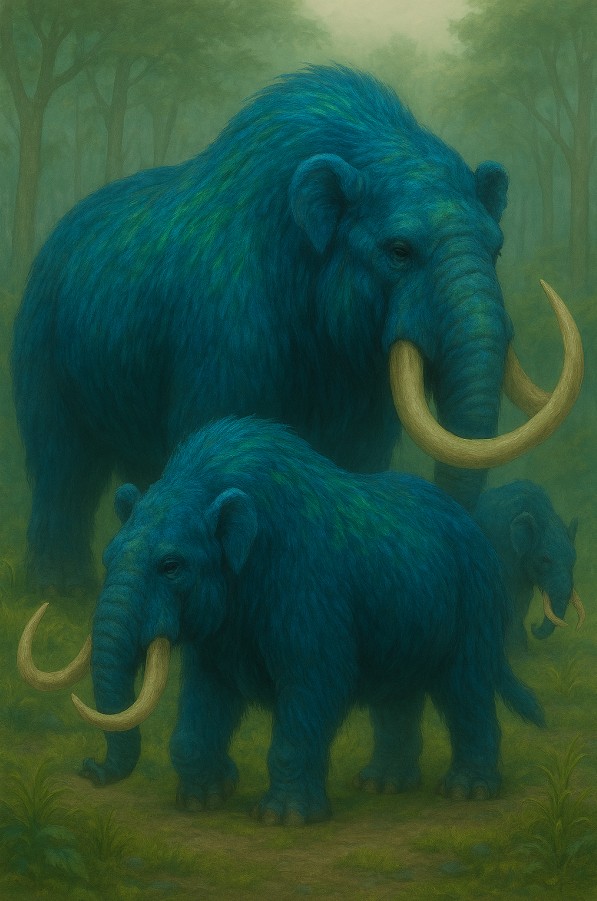
It was a warm Dysor evening, and Astraea, Isolde, Maeve, Dravena, and Thyra were lounging in the sunken hangout pit of Dravena’s villa on the coast just outside Rytaga. It was a miracle the villa was still standing: Rytaga had once been one of Samkat’s largest and most prosperous cities, but now only ruins remained.
The five had enjoyed a rare and exquisite meal they had saved for this occasion: glowsi radh – glowing roots with a soft, sweet taste that had once grown only in the shaded forests of Samkat before the Great War – and flurok, a mix of grains that grew only on the far side of the planet. The highlight was the quaril steaks. Once considered a delicacy, the gentle quaril animals with their deep blue fur (or emerald green, depending on the solara you encountered them) were now nearly extinct, like so many other species.
They were pleasantly drowsy from the zythar they had been drinking. Four empty bottles stood on the table. Isolde was filling their glasses from the fifth and final bottle. It would most likely be their last evening. They had played it smart: with all of Samkat at war, it could have been any leader, but Sigrith had proved far more vindictive than they had dared to hope. Of all the leaders, she was the one who would press the red button tonight, wiping out every inhabited region on Samkat.
Isolde, Astraea, Maeve, Dravena, and Thyra raised their glasses to the only beautiful alternative that had truly succeeded in its intention: saving Samkat.
OBLIVION
The few survivors looked out over the ruins of their world. They were shocked and deeply saddened by the loss of their loved ones, but to their own surprise, it also felt like a liberation—from the technology they had become dependent on, from the social structures that had felt like chains, from the constant guilt that every bite of food and every new piece of clothing was harming their world.
They built a handful of huts that became a village. With no more pollution, Samkat recovered quickly, and the wild land around the village provided everything the inhabitants needed to survive. The hunters never killed more animals than necessary to feed and clothe the people, and they sowed as many flowers, trees, vegetables, and fruits as they harvested.
Because people reproduced with great joy, more villages emerged, and the spaces between them gradually grew smaller. But that didn’t matter: there was enough room and food for everyone.
As the zyrons passed, people forgot what had happened and how it had begun. Thyriel, the village elder of Rathvel and the only one left from the group of survivors, remembered everything and grew concerned. She also remembered the old history lessons, especially the stories of the Fire Pit Peace Meeting. She packed a small bundle, told her fellow villagers she would be gone for three luna, and ventured into the wilderness.
After three luna, Thyriel returned. Just as Alyndra had done long ago, she asked the inhabitants of all nearby villages to prepare various delicacies and gather around a fire pit she had arranged for the occasion.
When everyone was seated and looking at Thyriel expectantly, she told them she had done a great deal of thinking during her walk and wanted to share an important lesson. The people grew very quiet, for they knew she was the only one who carried all the knowledge of Old Samkat.
She began to speak.
Long ago, Samkat experienced a time of prosperity and harmony like we have now. When the population grew too quickly, they forgot the old values. The people worshipped five goddesses: Astraea, Isolde, Maeve, Dravena, and Thyra. The goddesses bestowed blessings upon the people but also warned them of the dangers of excess and greed.
When the Samkatans ignored their warnings and indulged in the gifts of Samkat and the goddesses, the goddesses decided to sow chaos and division among them so they would criticize and fight one another. The people plunged into civil wars, which ultimately culminated in the Great War that nearly wiped out all of humanity.
To prevent this from happening again, I want to give you some guidelines.
Hurting another, whether in word or deed, is hurting yourself. So be kind to one another.
Work together and support each other.
Think carefully before having children, and do not have more children than we can support with the resources we have.
Distribute basic necessities like water and food fairly, so no inequality can arise.
I have no more guidelines, because as long as we maintain a balance between humans and nature, there will be enough space and food, and thus peace and prosperity.
Thyriel looked around. Everyone was nodding. Satisfied, she raised her cup to toast to a beautiful new world where people could do better.
—
In the following zyrons, people worked to rebuild their world. Old Thyriel slipped away peacefully in her sleep shortly after the Fire Pit Meeting, but no one forgot that gathering or the guidelines she had given them.
People felt the need to honor her wisdom and called her a goddess. Soon the gathering became The Story and her guidelines The Rules, and they were recorded in The Book. And because they could not help themselves, they had too many children, and when those children grew up, they too had too many children, and soon people began to get in each other’s way, annoy one another, and judge one another, and The Book became a tool to beat each other with…
During the writing of this story, I – despite my great resistance to AI – used AI for the first time in the form of Copilot, and I found it (sorry) amazing.
Everything was written by me, except for the two sentences in which Samura creates the world (I’m not well‑versed in the biblical story, and when I asked CP for a Samkatian variant for Samura, it was exactly what I was looking for) and a few sentences in the descriptions of the careers of Dravena, Thyra, and Sigrith, because I didn’t have the patience to figure out how careers in those specific fields could develop – my focus was on telling the story.
I had been mulling over the idea for a while, but I couldn’t quite grasp the form or several details, so I typed a rough description and asked if CP had any ideas. CP immediately gave me suggestions for a structure using some key words from my description, supplemented with technical writing tips and questions that challenged me. That was enough to get started. After that, CP helped me, upon request, to come up with names for people, places, and objects, and a metric system based on principles such as chaos and collapse (Rytaga means “ruins” in Proto‑Slavic, a dead language). The only name that actually exists is Sombart, a reference to Werner Sombart and his creative destruction. Because I kept the session open for the entire writing process (about five days), CP remembered all the information, understood my principles, and could think along with everything. CP occasionally encouraged me with what felt like real, substantial compliments. When CP got stuck three‑quarters through the story, it felt as if I had lost my sparring partner, and I was almost angry at the CP in the new session, because that clumsy CP knew nothing about the story that had become so alive.
I did not invent patience or sustained focus, so without CP’s help, this would have been a much shorter and less developed story. I don’t think I’ve ever written a story for so long and so intensively, or been so absorbed in it: every free moment, even with a plate of food next to me, I was writing. I must admit – although it feels strange, especially given the theme of the story – that it was a very successful collaboration.
Praise be to Astraea.
POSTSCRIPTUM
Shortly after I posted this story (originally on a blog site), I received such a remarkable analysis by email from a reader that I’m sharing it here (with permission). I wasn’t aware of the trinity I was charting while writing it. It’s wonderful that the story makes people think in this way ❤️
“What makes your story so powerful is the quiet symbolism running through the three women: Alyndra, Samura, and Thyriel together form a kind of mythical movement, a cycle that begins again and again, yet never in exactly the same way.
Alyndra stands at the beginning. She invents a story to bring about peace. Her lie is a gentle lie, born from care and responsibility. She creates a myth as a tool, a way to tame chaos and reconnect people with one another. In her hands, a story is still something human, something that offers direction without dominating.
Samura is the next step in that movement. She does not exist, yet her influence is real because people believe in her. She is Alyndra’s imagination grown larger than its creator, a projection that begins to lead a life of its own. Samura shows how stories detach themselves from their origins and transform into something that rises above humanity – a goddess who was never meant to be a goddess, but who becomes one through the power of belief and repetition. She is the proof that myths can become stronger than facts, and that people can forget their own creations.
And then comes Thyriel, the last in the line, the one who still remembers everything. She tries to do better. She sees the history, she knows the mistakes, she understands the patterns. She wants to break the cycle by telling a simpler, more honest story, not about gods, but about responsibility, cooperation, and restraint. But precisely because she is the only one who still knows what happened, her story becomes a foundation once again, another truth that grows larger than she is. The people elevate her to goddess, just as they once did with Samura. And so the cycle begins anew: a human tells a story to preserve harmony, and the people turn it into a system of power.
Together, Alyndra, Samura, and Thyriel show that myths do not arise from gods, but from humans trying to create order out of chaos. And that humans – even with the best intentions – will always create new gods. It is not a circle but a spiral: each generation tries again, with new words and new rules, yet the human tendency to elevate stories into absolute truths remains the same. That is the tragedy and the beauty of Samkat: that humanity keeps beginning again, keeps hoping again, and keeps stumbling over its own need for meaning.”